Showing posts with label Permaculture. Show all posts

Thursday, April 12, 2018

It's the Pits....

It's always nice when you don't have to spend extra money on hobbies. From Inhabitat.com comes this suggestion:


How To Grow An Avocado Tree From An Avocado Pit

The big caveat is that like many other fruit trees, avocados grown from seed don't necessarily turn out like their parent, and it can take 3 to 15 years to find this out.

Friday, August 5, 2016

FreEBook: Plant Guilds

There are a ton of free E-books to download on the Internet (and considering how little electrons weigh, a ton is a whole heck of a lot), and many of them pertain to the topics I cover in this blog.  There are two ways to approach this bounty: one is to provide long lists to download en masse, and the other is to review them one-by-one.  The major advantage of the first is that you have all the information if you lose access to the Internet; the main disadvantage is that you won't go through them when you download them, so you'll need to discipline yourself to come back to them later.

Since a number of people have already done the first option, I will not be doing it here.  I will, however, provide links to those links and even repositories.  Instead I will be providing links to individual e-books in the same annotated manner I have been for articles, videos, and everything else.

The first free E-book comes from MidwestPermaculture.com: Plant Guilds.  This is a bit of a "cheat sheet" for doing permaculture in temperate climates, having done some of the design work for you.  In it are 10 plans of plants that go together.  Most of them are labeled by the largest tree in them; the two notable exceptions are the Bee Guild, to attract pollinators, and the Wet Meadow Guild.

Monday, July 25, 2016

Creating Biodiversity

On Reddit, FlimFlamandFlamJam asks, "Let's say I bought 1,000 acres of monocropped farm land. What would be the best way to go about converting it back into land with a lot of biodiversity? And let's say it's just me and I don't have a team helping me."

My answer:

First question, is the land flat or hilly?

Second question, you say it's just you. Does that mean just your muscle power, you and any animals you can control, or you and some big machinery you can rent?

Because if it is just your own muscle power, I find 1/4 acre plenty to keep up with unless it was my full-time job, I couldn't even imagine 1000 acres. That said, and if your land is flat, the main thing you can do to increase biodiversity is just start introducing plants that you think will be useful. You can use mixes from places like Ernst Seeds if you want.

If the terrain is hilly, you can start in on a better option for increasing biodiversity: creating ponds. This is best done with the keyline system in any case, but if its just your own muscle power, this is critical.

With heavy machinery, you can go a little crazier, even on flat land. You still really need to pay attention to the contours, but you do have the opportunity to reshape them. In fact, the best thing you can do to increase the biodiversity of flat land is to change it into hilly land by creating hugelkulture beds. You can do this by hand, but on the scale of 1000 acres, it would take several person-lifetimes.
And when you make water features, swimming ponds where you can dive in from the shore are not exactly the best for biodiversity. You want to really emphasize the water's edge and make it as big as possible if you want to encourage biodiversity.

If you have animals, you have the opportunity to do more than just your muscles, but not as drastic as large machines. One thing you can do is look at abandoned areas nearby and see what takes over, and then figure out what will graze on that. That will help keep things in balance without requiring your constant attention. (But don't just graze willy-nilly, or they just might avoid the thing that tends to take over.)

Thursday, April 14, 2016

Farming the Forest

"Forest gardening" and "food forests" have been popular concepts in permaculture for a long time.  They are getting to be more mainstream now - Cornell has an online introduction to forest farming.  This looks like an interesting series of videos to watch.

Friday, January 22, 2016

Greenhouses without Glass

You may be familiar with the espalier pruning technique where trees are made to grow flat, but did you know that greenhouses had their origins from the same way of growing stuff in climates that were too cold: Fruit Walls.  Low-Tech Magazine has an in-depth article about this technology from the Renaissance.

Thursday, January 14, 2016

This Rots....

If you want a good in-depth discussion on composting, listen to Trevor Van Hemert on The Survival Podcast.  What makes him an expert?  It's his day job!  He has a profitable business collecting compostable waste -- by bicycle -- and selling the finished compost.

Tuesday, January 12, 2016

All Cows Eat Grass

Occam's Grazer: An In-depth Introduction to Holistic Management
This is a really good introduction to holistic management, a way of raising cattle that helps restore the landscape.  This is intended for general audiences, it doesn't require a lot of background in animal husbandry.

Thursday, July 9, 2015

Profitable Permaculture Homesteading

English: Permaculture mandala by Graham Burnet...
English: Permaculture mandala by Graham Burnett used with permission (Photo credit: Wikipedia)
Jack Spirko is taking a vacation from The Survival Podcast starting today.  The last time he did that I started looking around at random articles until I found this pair: The Profitable Small Acre Homestead and The Forest Market Garden Concept.  The second builds on the first, and these have so much information in them they are worth listening to more than once.

Also, while he is on vacation, he is having a sale on his Member Support Brigade.

Friday, June 26, 2015

My Cup Runneth Over...

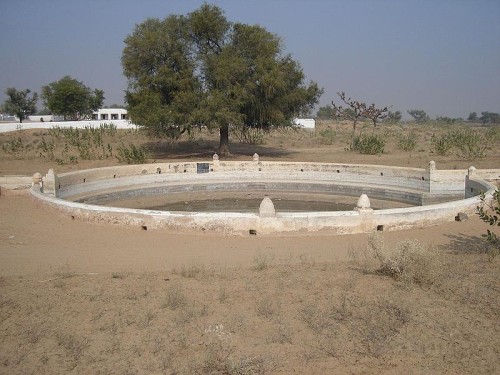
Much fuss is being made about the new NASA study that shows many of the world's aquifers are depleting.  Less is being said about solutions to the problem.  No Tech Magazine reports on a traditional solution in India, the johad.  This does not require lots of money, but it does require community effort.  The description of the way it works bears a strong resemblance to P. A. Yeoman's keyline system for distributing water.

Monday, June 8, 2015

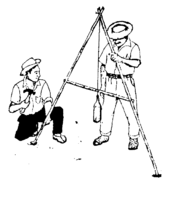
Marking Contours with a Simple A-Frame Level

I'm getting ready to make an on-contour hugelkulture bed with upslope swale, so I've been looking for a quick and easy way to mark contours.  One of the best guides I've found is Hesperian's Community Guide to Environmental Health.  The linked page not only describes how make the A-frame level using just sticks, string, rocks, and (optionally) nails and maybe a bottle, but also where and how to make contour barriers to prevent erosion.

Monday, April 20, 2015

Gardening Posters

Afristar Foundation has some nice posters available to download on their Educational Resources page.  Here is the one for Permaculture Zones:

Friday, November 28, 2014

Where the Night Finds You, Part 2

Beginning of story

Satchel asked, "I need to pick up some stuff, you wanna come along?"

"I guess," Toby answered.

"It's just a couple blocks to the first stop."

The pair walked in silence at a fairly brisk pace.  This gave Toby a better chance to observe Satchel, which was part of the point of the silence, as well as not making Toby feel like he was being interrogated.  Why he was called Satchel was obvious, the big bag under his arm was so well-worn it almost looked like it was a part of him; he must have carried it with him wherever he went.  It was what he had pulled the miniature loaf of bread from.

Satchel was a fairly young man, too: not a single white hair showed on his head or his beard, and while his beard was obviously kept trim, it was not very full to begin with; had he been so inclined, he probably would have only started shaving a couple years earlier.

Despite this, Satchel's face still had a weathered look, and even without many wrinkles he didn't have a youthful expression or exuberance.  He was quite short and wiry, too; despite their difference in age, Toby found he could almost match Satchel's stride.

"Okay, we're here," Satchel announced.  Toby was confused.  They were at a vacant, sunny, weed-filled lot.

"I need to harvest some pigweed."  Satchel pulled out a two-foot tall plant -- one of the smaller specimens -- and handed it to Toby.  It looked vaguely familiar to Toby; he had seen it around before, but he had never paid any attention to it.

"See how the root is red? And the stalks of the leaves?  That's one of the defining characteristics.  And look at how the leaves near the bottom are diamond-shaped, but they get narrower near the top.  Check out how the leaves are attached, alternating back and forth.  And feel how hairy the top of the stem is."  Toby followed along as Satchel pointed out the plant's features.

"This big spiky seed head at the top is what we're interested in today.  We want the ones that have started to ripen and are no longer green.  You can grab some of the smaller ones and I'll grab some bigger ones.  Just grab whatever you feel comfortable carrying."

They spent the next 15 minutes each gathering up an armful of the pigweed.  Satchel noticed Toby struggling after 5 minutes and let him know it was okay if he couldn't pull up the plant to just break it off.

When his bundle got big enough he could barely get his arms around it, Toby came over to Satchel and asked "Is this good?"

"That's great, Toby!  I wasn't expecting you to pick that much.  And it looks like you did a good job of picking out the ripe ones, too."  Toby smiled.

"What do we do with these now?," Toby asked.

"We need to dry them out.  I've got a place about five blocks away for that."

They walked for a minute before Satchel asked, "Have you gone to school?"

"A couple years."

"Did you like it?"

"Well, the first one I went, yeah, I kind of enjoyed, but I hated the second one."

"You seem pretty smart, Toby.  What was the problem?"

"We didn't really do anything at my second school, except occasionally some stupid boring drills and tests.  They taught us fun stuff at my first school."

"That's too bad you couldn't stay at your first school."

"Yeah, they made me move after... well...."  A tear started to well up in Toby's eye.

"That's okay, you don't have to talk about it."

After walking another minute, Satchel announced, "This is the place."  Again, Toby was a little confused, though not as much as last time.  The house was obviously vacant and looked like the kind of places Toby had been staying in.  He was a little disappointed, he had expected Satchel to have a little nicer place.  What really confused him, though, was how to get in; all the first story windows and doors were well boarded-up.

Satchel took him to the side of the house, in fairly narrow passage with the next house over.  They stopped at a basement window between two large evergreen bushes which pretty well hid them from the street.  Strangely enough, there was a combination lock on the window.  Satchel set down his bundle, dialed the combination, opened up the window, and slid himself in.  He motioned for Toby to follow as he grabbed his bundle and pulled it through.

Toby set down his bundle and followed.  There was a platform under the window to ease onto.  When he pulled his bundle inside and turned around, he got scared.  It was quite dark in that basement.  Satchel sensed Toby's anxiety.  "It's okay Toby.  Here, sit down and close your eyes.  Now breathe in deeply.  For 10 seconds. 1...2...3...4...5...6...7...8...9...10.  Now exhale slowly, again for 10 seconds. 1...2...3...4...5...6...7...8...9...10.  Okay now open your eyes."

His eyes had begun to adjust to the light, so he even though the only light came from the window behind him and another on the opposite wall, he could see that the basement was empty except for a set of stairs.

As they both headed up the set of stairs, Satchel let Toby know they were headed for the second floor.  When they opened the door at the top of the stairs, they walked in to what must have been the kitchen.  The main sign were the holes for the pipes and a couple broken cabinets and kitchen utensils; all the appliances and just about everything metal had been taken.

They headed around the corner into the living room, and Toby headed for the stairs going up.  Satchel yelled "Stop!  Those aren't safe."  He opened a closet door to reveal a makeshift ladder that had been nailed to the wall.

It was a little awkward climbing the ladder with the bundles of pigweed.  Satchel had Toby go first, since he had never done it before, and he did almost slip, but Satchel was right there to catch him.

Turning around at the top of the ladder, they were in a fairly large room -- perhaps a master bedroom originally.  The room was quite bright, because the sun was streaming in through the windows, which were intact but not boarded up.  There was something strange about them, however, and Toby went to take a closer look.  He walked around several blankets spread out on the floor which were covered with a number of different plants, most of which he didn't recognize.  Some looked like they had been picked yesterday and others were complete dry.  As Toby got closer to the window, he saw that a heavy green mesh had been put up in outside the windows, a little distance away from them.

While Toby was checking out the windows, Satchel pulled another thin cloth out of his bag and spread it on an empty spot on the floor.  He carefully placed the plants in his bundle on the cloth, giving them as much space as he could in between.  "Toby, could you hand me your bundle?," he asked.  Toby did, and Satchel finished filling up the space on the cloth.

Satchel then moved over to one of the cloths that was filled with dry plants.  "Could you help me push these towards the center?," he asked Toby.  In a couple minutes they had freed up about 6 inches on the top and bottom and a foot on the sides.  Satchel then folded the top and bottom down over the dried plants and asked Toby to hold them.  Satchel proceeded to fold the one side over and started to roll it into a bundle.  Satchel pulled two pieces of twine out of his bag, tied up the bundle, and stuck the whole thing back in.

"Thanks, Toby, you were a big help.  That is so much harder to do by myself."  Toby smiled.  Adults thanking him for anything was something he wasn't used to, but it felt natural coming from Satchel.

"The next thing I have to do is drop this off to be threshed.  You okay with meeting someone else, Toby?"

Toby shrugged and said, "Yeah, sure."

"Great!"  Satchel smiled.

Next part


Wednesday, June 18, 2014

Tales of an Exiled Citizen #6: In Morning

Beginning of story
Previous part

That first night Outside I dreamt I was back in the City, living the life of crime I had had before I got caught.  So when I finally did wake up, for a little bit it seemed like being Exiled was the dream.  Then as the reality sunk in, there was nothing I wanted more than to go back to that dream world.  And believe me, I tried.  But my body was having none of it.  The pile of twigs and branches may have been softer and warmer than the ground, but they were nowhere near the bed I had been accustomed to sleeping in.  What warmth that had been gathered from the previous day had dissipated, and my clothes would only have been adequate if I had 2 or 3 layers of them.

The discomfort of the cold on my body finally won out over the depression over my situation, and I moved to the other corner of the Shelter where the sun's rays were starting to warm things up.  Sitting there I took stock of the situation.  Thankfully, the Citizens had been very logical and methodical; they only took what they could use, and they only destroyed what they saw as a threat.  Of course, the roaster I had made, falling into both categories, was completely missing -- no surprise there.  Most importantly, the cistern and biofilter appeared untouched.  Of course, there no longer was any roof to feed water into the cistern, and who knew how long the biofilter would last with the shelter no longer fully intact to protect it.  For the time being, though, I didn't have to worry about fresh water.  Which was good, because I suddenly realized how thirsty I actually was, having not had anything since before my sentencing.

The Shelter was designed primarily for growing plants, not for people to live in, so there were none of the amenities like sinks I was used to having in the City.  The output of the biofilter drained into a small covered reservoir, as much as the plants in the Shelter would use in a couple days, which was plenty for my purposes.  I carefully brushed off an access panel so no debris would fall in.  Then I opened it up, took a little water to wash off my hands as best I could, and wiped them on a clean spot on my clothes.  Finally I cupped my hand and drunk my fill of the water.  It definitely tasted strange to compared to City water, which really had very little taste.

The cistern was massive, taking up the entire north wall, as it needed to be to store the winter rains through the summer heat.  It also helped moderate the temperature to prevent occasional frosts from killing plants inside the Shelter.  With the glazing gone, both those functions would soon cease.  Still, checking the hatch, the level was pretty close to full, so it would be all I needed well into summer.

When the water system had been fully intact, it was quite a testament to the Founder's genius.  The angle of the collection grate encourage debris to wash down while the water ran in.  The first few minutes worth of rain was shunted off so the roof was relatively clean by the time the water started filling the cistern.  Everything worked by gravity or capillary action, no moving parts were involved.  In addition to supplying the needs of the plants, the water worked with the passive ventilation system to keep the temperatures moderate during the summer.  I wonder how long the Founders had to work with that to get that balance just right.

With my thirst slaked and the chill of the night burning off, I decided it was time to stop admiring the handiwork of the Founders and start the work of the day.

Part 7: Buried Treasure

Tuesday, June 10, 2014

Tales of an Exiled Citizen #4: The Shelter

Beginning of story

Even in the last rays of sunshine, the first glimpse of the shelter brought on a new emotion: shame.  My pride had failed me once again.  It took 3 weeks of exploring before I found the shelter, even though it was only a 20 minute walk away from the City.  But all the trips I had made to it left a clear trail which they had obviously followed.  It wasn't enough to make sure that no one could use the passage I had found, they had to destroy the supply, too.

The shelter had been a marvel when I originally discovered it.  It was obviously the work of the Founders.  It must have been a prototype for the systems the City was based on.  The glazing appeared to be the same material as the Dome is made out of.  Now, since I am not a researcher, I can't say that for certain, but as a maintenance man it certainly seemed to be identical to what I worked with.  That's why they took it all, and how I knew at first glance that they had been there.  The framing for the glazing was missing, too, so it would not have even been possible to replace it with a lesser material.

The tears finally burst forth.  For decades, the shelter had stood, unattended, collecting the rainwater, absorbing the heat of the sun, keeping the plants inside healthy from the extremes of the climate outside.  Now, because of my folly, that system was destroyed forever.

Knowing that they had already been there, the shelter was as I expected when I got there.  My big beautiful Bean tree was gone, with just a burned out stump to show where it had been.  All the seedlings I had planted had been cut off at ground level.

Even though my day had not been very strenuous physically, I still felt exhausted.  If I had only been smart enough to take different paths to the shelter so as not to leave a trail, I might have been able to live a somewhat comfortable life there.  Still, it was getting dark, and I had no place better to go for the night, so I walked down in.  Even without the glazing above, the northeast corner of the shelter still had soaked up the warmth of the evening sun and would keep me from getting too cold.  I gathered up all the little branches I could to make a rough mattress.  It was by far the least comfortable thing I had ever slept on up to that point.  Were I not so exhausted I doubt I ever would have gotten to sleep.  I was glad I did; tomorrow was going to be a long day.

Part 5: A Life of Crime

Saturday, August 24, 2013

Yet Another Chicken Tractor Design

This one is from Lazy B farm.  It's not particularly elegant, but the design does look pretty simple, and there are lots of pictures to follow.

Sunday, December 9, 2012

Tips for Chicken Eggs at Home


Colorado State University has a useful page on "Home-Produced Chicken Eggs," written by M. Bunning and J. Avens.  It covers the basics without going into too much detail.

Wednesday, August 8, 2012

Intro to Paul Wheaton

For anyone who is not familiar with Paul Wheaton or Permaculture, I suggest you check out "Grow wild: Paul Wheaton's at the forefront of a permaculture revolution" by Erika Fredrickson in the Missoula Independent.  Then if you like that sort of thing, head over to the forums at Permies.com, where they talk about bone sauce, homesteading, and Permaculture, all the time.