Pellet stoves are a convenient way to heat your home with a renewable resource. But you may find buying dozens of bags of pellets disconcerting. Did you know you can Make Your Own Pellets? And they don't have to be out of wood. ABC Machinery has hammer mills, dryers, and pellet mills that will convert grass clippings into grass pellets on a homestead level. The Vermont Grass Energy Partnership did a Technical Assessment of Grass Pellets as Boiler Fuel in Vermont.
Showing posts with label Sustainability. Show all posts
Showing posts with label Sustainability. Show all posts
Wednesday, February 13, 2019

Thursday, November 22, 2018
Homegrown Furniture
 How do you make furniture out of solid wood? Try growing it as a single piece. Okay, maybe it isn't something that amateurs can do at home, but the results certainly are intriguing. Gavin Munro has come up with special molds and pruning and grafting techniques to get the trees into the proper shape. Full Grown Furniture in England sells them, but they cost thousands of dollars and you have to wait many years.
Friday, April 28, 2017
Flea Be Gone
The weather is getting warmer, so that means nasty buggies are coming out. Plenty of ways are available to poison them, but you have to be careful they don't poison you or your pets -- even if they are natural.
Saturday, August 27, 2016
FreEBook: Bulletin of Primitive Technology
The second free publication I'm featuring is actually a magazine, not a book: Bulletin of Primitive Technology, first issue. At 52 pages, though, it rivals much of what is being published today as e-books. The only thing that makes it a magazine is the variety of articles. Some are deeply philosophical, others are intensely practical. The magazine is no longer being published, but the material has been collected into several books put out by the Society for Primitive Technology (which are not free).
Friday, August 5, 2016
FreEBook: Plant Guilds
There are a ton of free E-books to download on the Internet (and considering how little electrons weigh, a ton is a whole heck of a lot), and many of them pertain to the topics I cover in this blog. There are two ways to approach this bounty: one is to provide long lists to download en masse, and the other is to review them one-by-one. The major advantage of the first is that you have all the information if you lose access to the Internet; the main disadvantage is that you won't go through them when you download them, so you'll need to discipline yourself to come back to them later.
Since a number of people have already done the first option, I will not be doing it here. I will, however, provide links to those links and even repositories. Instead I will be providing links to individual e-books in the same annotated manner I have been for articles, videos, and everything else.
The first free E-book comes from MidwestPermaculture.com: Plant Guilds. This is a bit of a "cheat sheet" for doing permaculture in temperate climates, having done some of the design work for you. In it are 10 plans of plants that go together. Most of them are labeled by the largest tree in them; the two notable exceptions are the Bee Guild, to attract pollinators, and the Wet Meadow Guild.
Since a number of people have already done the first option, I will not be doing it here. I will, however, provide links to those links and even repositories. Instead I will be providing links to individual e-books in the same annotated manner I have been for articles, videos, and everything else.
The first free E-book comes from MidwestPermaculture.com: Plant Guilds. This is a bit of a "cheat sheet" for doing permaculture in temperate climates, having done some of the design work for you. In it are 10 plans of plants that go together. Most of them are labeled by the largest tree in them; the two notable exceptions are the Bee Guild, to attract pollinators, and the Wet Meadow Guild.
Monday, July 25, 2016
Creating Biodiversity
On Reddit, FlimFlamandFlamJam asks, "Let's say I bought 1,000 acres of monocropped farm land. What would be the best way to go about converting it back into land with a lot of biodiversity? And let's say it's just me and I don't have a team helping me."
My answer:
First question, is the land flat or hilly?
Second question, you say it's just you. Does that mean just your muscle power, you and any animals you can control, or you and some big machinery you can rent?
Because if it is just your own muscle power, I find 1/4 acre plenty to keep up with unless it was my full-time job, I couldn't even imagine 1000 acres. That said, and if your land is flat, the main thing you can do to increase biodiversity is just start introducing plants that you think will be useful. You can use mixes from places like Ernst Seeds if you want.
If the terrain is hilly, you can start in on a better option for increasing biodiversity: creating ponds. This is best done with the keyline system in any case, but if its just your own muscle power, this is critical.
With heavy machinery, you can go a little crazier, even on flat land. You still really need to pay attention to the contours, but you do have the opportunity to reshape them. In fact, the best thing you can do to increase the biodiversity of flat land is to change it into hilly land by creating hugelkulture beds. You can do this by hand, but on the scale of 1000 acres, it would take several person-lifetimes.
And when you make water features, swimming ponds where you can dive in from the shore are not exactly the best for biodiversity. You want to really emphasize the water's edge and make it as big as possible if you want to encourage biodiversity.
If you have animals, you have the opportunity to do more than just your muscles, but not as drastic as large machines. One thing you can do is look at abandoned areas nearby and see what takes over, and then figure out what will graze on that. That will help keep things in balance without requiring your constant attention. (But don't just graze willy-nilly, or they just might avoid the thing that tends to take over.)
My answer:
First question, is the land flat or hilly?
Second question, you say it's just you. Does that mean just your muscle power, you and any animals you can control, or you and some big machinery you can rent?
Because if it is just your own muscle power, I find 1/4 acre plenty to keep up with unless it was my full-time job, I couldn't even imagine 1000 acres. That said, and if your land is flat, the main thing you can do to increase biodiversity is just start introducing plants that you think will be useful. You can use mixes from places like Ernst Seeds if you want.
If the terrain is hilly, you can start in on a better option for increasing biodiversity: creating ponds. This is best done with the keyline system in any case, but if its just your own muscle power, this is critical.
With heavy machinery, you can go a little crazier, even on flat land. You still really need to pay attention to the contours, but you do have the opportunity to reshape them. In fact, the best thing you can do to increase the biodiversity of flat land is to change it into hilly land by creating hugelkulture beds. You can do this by hand, but on the scale of 1000 acres, it would take several person-lifetimes.
And when you make water features, swimming ponds where you can dive in from the shore are not exactly the best for biodiversity. You want to really emphasize the water's edge and make it as big as possible if you want to encourage biodiversity.
If you have animals, you have the opportunity to do more than just your muscles, but not as drastic as large machines. One thing you can do is look at abandoned areas nearby and see what takes over, and then figure out what will graze on that. That will help keep things in balance without requiring your constant attention. (But don't just graze willy-nilly, or they just might avoid the thing that tends to take over.)
Thursday, April 14, 2016
Farming the Forest
"Forest gardening" and "food forests" have been popular concepts in permaculture for a long time. They are getting to be more mainstream now - Cornell has an online introduction to forest farming. This looks like an interesting series of videos to watch.
Friday, January 22, 2016
Greenhouses without Glass
You may be familiar with the espalier pruning technique where trees are made to grow flat, but did you know that greenhouses had their origins from the same way of growing stuff in climates that were too cold: Fruit Walls. Low-Tech Magazine has an in-depth article about this technology from the Renaissance.
Friday, January 15, 2016
Hot Stuff....
You may have seen people collecting aluminum cans to recycle, but probably not like this:

Mobile Foundry for Recycling Aluminum. They use the molten aluminum to cast decorative but useful objects like chairs.
Mobile Foundry for Recycling Aluminum. They use the molten aluminum to cast decorative but useful objects like chairs.
Thursday, January 14, 2016
This Rots....
If you want a good in-depth discussion on composting, listen to Trevor Van Hemert on The Survival Podcast. What makes him an expert? It's his day job! He has a profitable business collecting compostable waste -- by bicycle -- and selling the finished compost.
Wednesday, January 13, 2016
'Dem Dry Bones
You may take supplements for healthy joints, but what would you do if they were no longer available? The Prepper Pages has instructions for Making Dehydrated Bone Broth. Not only is this something that can be done with relatively simple equipment, it is shelf stable, so you can start making it up now for use later.
Tuesday, January 12, 2016
All Cows Eat Grass
Occam's Grazer: An In-depth Introduction to Holistic Management
This is a really good introduction to holistic management, a way of raising cattle that helps restore the landscape. This is intended for general audiences, it doesn't require a lot of background in animal husbandry.
Friday, January 8, 2016
Back From The Dead
I love it when I can pull people off my Zombie Blogroll. Johnny Max and The Queen are back on The Self-Sufficient Homestead with Episode 202. (They are up to 205 now.) It has been a long hiatus, but in the meantime they have finally made the move out to their homestead.
Sunday, July 19, 2015
You Light Up My Life
Okay, so I even stole the title... but the pair of geeks over at TechNomadia have such great options for lighting that I am in awe:
- Thin-Lite LED Surface Mount Fixtures
- DIY Dimmable Undercabinet LED Lighting
- LIFX WiFi LED Bulbs (Screw in Style)
- Solar Ice Rocks
- Solar Rechargeable Lantern


Friday, July 17, 2015
Animal Power
 |
| English: Llama trekking experience, Forest of Dean Treks are available, starting from the Speech House Hotel, either with llamas or donkey/pony and trap. Here the animals are resting at Mallards Pike Lake whilst the trekkers take on refreshments. (Photo credit: Wikipedia) |
Monday, July 13, 2015
Blasted Weeds
Do you have row upon row filled in your garden filled with weeds? Here's a new way to deal with them: blast them! Okay, so the system may not be commercially available yet, but it is an interesting concept: using 100 PSI air to propel gritty organic substances to pummel weed seedlings.
Wednesday, July 8, 2015
The Sao Paulo Challenge
If you're not ready to go completely without running water (hat tip to Øyvind Holmstad), here's a suggestion: try living without running water for 5 days a week. It doesn't have to be in a row; you can go 2 or 3 days without, one day with. This challenge is inspired in part by the water crisis in Sao Paulo and partly by the second time my pipes burst last winter. I decided rather than repairing it right away and risking them freezing a third time, I decided to wait a couple weeks until the weather got warmer. In the meantime I would turn on the water every couple days to wash up and store up water for the off days.
Related articles
Related articles


Monday, June 29, 2015
Drying in the Sun

Friday, June 26, 2015
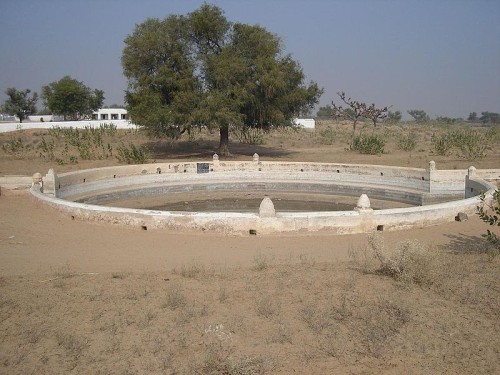
My Cup Runneth Over...


Sunday, June 21, 2015
Dome Sweet Dome
Michael Matthews is offering plans for what he calls the "Ultimate Survival Fortress". I haven't bought it (yet), but it seems to be a fairly standard earth-bag type of dome home. That said, the price he is asking seems quite reasonable for the knowledge he seems to be providing (and I am not an affiliate, so I am not getting any commissions). While $1 a square foot is literally a dirt-cheap price for living space, I certainly would not want to make a mistake after putting in dozens or maybe hundreds of hours of heavy labor.
Subscribe to:
Posts (Atom)