Showing posts with label Food. Show all posts

Thursday, April 12, 2018

It's the Pits....

It's always nice when you don't have to spend extra money on hobbies. From Inhabitat.com comes this suggestion:


How To Grow An Avocado Tree From An Avocado Pit

The big caveat is that like many other fruit trees, avocados grown from seed don't necessarily turn out like their parent, and it can take 3 to 15 years to find this out.

Wednesday, December 14, 2016

How to Make Christmas Pudding

Getting ready for the holidays can be very stressful.  High on that list is making special dishes.  Here is a very easy-to-follow recipe for making Christmas pudding.  I think you'll find your stress levels will go down just watching it.


Tuesday, September 13, 2016

Oh Shane, Will You Ever Learn?

I'm not sure how I've missed it for two years, but there is a deliriously funny series of pictures of notes to a Walmart employee by the management.  One of the best:
The complete list from the original poster:
  • Shane, quit offering extended warranties on the fried chickens -Management
  • Shane, stop asking, "Is that your final answer?" and offering to let them phone a friend after each order -Management
  • Shane, when a customer asks where to find a product, give them an aisle number, not directions to Albertsons -Management
  • Shane, quit putting price tags on deli equipment and trying to sell them to customers -Management
  • Shane, stop implying that Walmart keeps the "good stuff" in the back -Management
  • Shane, I don't know what "Swinecraft" is, but ham can not be sold as a building material  -Management
  • Shane, quit putting on multiple name tags and pretending to have a personality disorder  -Management
  • Shane, the deli is not an appropriate place to practice your ventriloquism, please stop making puppets out of the paper bags  -Management
  • Shane, stop putting "Stoner approved" seals on the fried chicken  -Management
  • Shane, stop putting out samples labelled as "Mystery meats"  -Management
  • Shane, stop putting "Some assembly required" stickers on the 8-piece chickens  -Management
  • Shane, any free samples you offer must come from the deli, not electronics!  -Management
While the real-life Shanenigans stopped there, on the Internet they have taken on a life of their own, with an entire subreddit devoted to Shaneisms.
 

Saturday, August 20, 2016

Shopping List....

Everyone is on a budget these days, especially preppers.  It's hard enough when you are just trying to deal with today's needs, but when you are trying to set aside for the future, it's that much more difficult.  One way to prioritize is to buy things which are relatively inexpensive now but which will become much more expensive later on; Urban Survival Site has a list of 40 of these.  It's mostly common sense, but it's nice to have a list to make sure you are missing any.

Friday, August 5, 2016

FreEBook: Plant Guilds

There are a ton of free E-books to download on the Internet (and considering how little electrons weigh, a ton is a whole heck of a lot), and many of them pertain to the topics I cover in this blog.  There are two ways to approach this bounty: one is to provide long lists to download en masse, and the other is to review them one-by-one.  The major advantage of the first is that you have all the information if you lose access to the Internet; the main disadvantage is that you won't go through them when you download them, so you'll need to discipline yourself to come back to them later.

Since a number of people have already done the first option, I will not be doing it here.  I will, however, provide links to those links and even repositories.  Instead I will be providing links to individual e-books in the same annotated manner I have been for articles, videos, and everything else.

The first free E-book comes from MidwestPermaculture.com: Plant Guilds.  This is a bit of a "cheat sheet" for doing permaculture in temperate climates, having done some of the design work for you.  In it are 10 plans of plants that go together.  Most of them are labeled by the largest tree in them; the two notable exceptions are the Bee Guild, to attract pollinators, and the Wet Meadow Guild.

Sunday, July 31, 2016

Foragers Beware....

Of course before you go picking wild plants to eat, you will need to know how to identify them.  Probably of greater importance is being able to distinguish plants that look similar but are poisonous.  Outdoor Life has an article on 3 Dangerous Plants That Look Like Edibles.  They are:

  • Giant hogweed (Heracleum mantegazzianum) looks like carrot or cow parsley
  • Moonseed (Menispermum canadense) looks like grapes
  • Horse nettle (Solanum carolinense) looks like tomatoes
Off-the-Grid News adds several more Dangerous Look-Alikes:
  • Water hemlocks (Cicuta sp.) look like carrot
  • Blue flag (Iris versicolor) and yellow flag (Iris pseduacorus) look like cattails
  • Indian strawberry (Potentilla indica) looks like field strawberries
  • Daffodils (Narcissus sp.) look like wild garlic
  • and of course, many edible mushrooms have deadly look-alikes.

Friday, July 29, 2016

Man with a Plan

Reverse Engineer posted his Energy Problem Solutions to the Doomstead Diner.  After having lost track of a wonderful article about growing algae for oil using carbon captured from a biomass-burning combined heat and power plant, I want to make sure I don't lose this:


Here is my plan for a sustainable Homo Sap society that is not down at H-G level.  I published it on OFW in the commentariat and it got about the same reception it would have received on NBL.

Energy Problem Solutions

I detailed in a prior post how to substitute distributed intermittent electric power for the current centralized on demand power grid for the public at large, as well as how to distribute out your factories and manufacturing in the places you can actually collect large amounts of renewable energy.  Such places are near large hydro facilities, near the ocean where you can capture steady Wave Action and Wind Power, in the Desert where you can capture reliable Solar Power and in geological hot spots like Iceland and Yellowstone where  Geothermal power can be captured in large quantities necessary for manufacturing.

However, these are not your only problems of course, the biggest one being transportation.

For this, you need to refurbish and upgrade the current rail systems.  Main long distance lines need to be electrified, with the power supplied all along the line through large solar and wind arrays.  Trains may not run continuously on these lines, they may have to wait for power to be supplied to the section of track they are on.  In the FSoA, these are only the main E-W and N-S rail lines.

Subsidiary lines which run off these routes can be run with Diesel-Electric Locomotives, utilizing biodiesel.  This brings goods within around a 300 mile radius to most locations in the FSoA.

Final transportation of goods is done with either animal power or small electrics which can be charged along the distribution route from wind and solar arrays.  Again, the transporter may have to wait a day or two to get enough power to continue with the journey to the final destination.

For Ocean Transport of goods between continents, we need to go back to smaller ships, primarily Sail.  However, there should be little need to move many goods between continents since all necessary items should be produced locally, such as food, clothing and shelter building materials.

The next area we are highly dependent on FF for is Agriculture, both for fertilizer and pesticides and for the machines necessary for large scale till farming of annuals.  We need to convert to growing mostly perennials on small plots of land cultivated through permaculture by individuals.  These biomes should be set up so there are competing insect predators to replace the pesticides.  Along with the permaculture biomes, we need to set up large scale hydroponics and aquaculture farms that are water and fertilizer conservative, and we need to recycle humanure into these facilities as fertilizer.

Most metals and other basic elements can be acquired scavenging from the debris left over from the Age of Oil.  What does need to still be mined can be done with electric heavy equipment periodically as power is available.  Large scale smelting of metal can be done with Solar Thermal plants, utilizing large fresnel lenses to concentrate heat.

Precursors for organic molecules we currently get from Oil can be grown and converted and polymerized as necessary, utililizing renewable electric production.

Now, will this syste support the current 7.2B people?  That is doubtful, but I do think it could support 700M.

The system will not be built from the top down, it has to build from the bottom up.  As the grand monetary system collapses, individual communities will need to set up their own systems for internal commerce.  Communities will need to be self-sufficient in food production for probably 50 years minimum before a larger food trading and distribution scheme could be worked out.

Monday, July 25, 2016

Creating Biodiversity

On Reddit, FlimFlamandFlamJam asks, "Let's say I bought 1,000 acres of monocropped farm land. What would be the best way to go about converting it back into land with a lot of biodiversity? And let's say it's just me and I don't have a team helping me."

My answer:

First question, is the land flat or hilly?

Second question, you say it's just you. Does that mean just your muscle power, you and any animals you can control, or you and some big machinery you can rent?

Because if it is just your own muscle power, I find 1/4 acre plenty to keep up with unless it was my full-time job, I couldn't even imagine 1000 acres. That said, and if your land is flat, the main thing you can do to increase biodiversity is just start introducing plants that you think will be useful. You can use mixes from places like Ernst Seeds if you want.

If the terrain is hilly, you can start in on a better option for increasing biodiversity: creating ponds. This is best done with the keyline system in any case, but if its just your own muscle power, this is critical.

With heavy machinery, you can go a little crazier, even on flat land. You still really need to pay attention to the contours, but you do have the opportunity to reshape them. In fact, the best thing you can do to increase the biodiversity of flat land is to change it into hilly land by creating hugelkulture beds. You can do this by hand, but on the scale of 1000 acres, it would take several person-lifetimes.
And when you make water features, swimming ponds where you can dive in from the shore are not exactly the best for biodiversity. You want to really emphasize the water's edge and make it as big as possible if you want to encourage biodiversity.

If you have animals, you have the opportunity to do more than just your muscles, but not as drastic as large machines. One thing you can do is look at abandoned areas nearby and see what takes over, and then figure out what will graze on that. That will help keep things in balance without requiring your constant attention. (But don't just graze willy-nilly, or they just might avoid the thing that tends to take over.)

Thursday, April 14, 2016

Farming the Forest

"Forest gardening" and "food forests" have been popular concepts in permaculture for a long time.  They are getting to be more mainstream now - Cornell has an online introduction to forest farming.  This looks like an interesting series of videos to watch.

Saturday, April 2, 2016

DIY Instant Oatmeal

Root Simple has a recipe for making your own instant oatmeal.  The key is precooking it in a dry oven -- I'll bet this is an excellent application for a solar oven; with all dry ingredients, you don't need to worry so much about undercooking.  I especially look forward to experimenting with different flavors and especially natural sugar substitutes like stevia.

Friday, January 22, 2016

Greenhouses without Glass

You may be familiar with the espalier pruning technique where trees are made to grow flat, but did you know that greenhouses had their origins from the same way of growing stuff in climates that were too cold: Fruit Walls.  Low-Tech Magazine has an in-depth article about this technology from the Renaissance.

Wednesday, January 13, 2016

'Dem Dry Bones

You may take supplements for healthy joints, but what would you do if they were no longer available?  The Prepper Pages has instructions for Making Dehydrated Bone Broth.  Not only is this something that can be done with relatively simple equipment, it is shelf stable, so you can start making it up now for use later.

Tuesday, January 12, 2016

All Cows Eat Grass

Occam's Grazer: An In-depth Introduction to Holistic Management
This is a really good introduction to holistic management, a way of raising cattle that helps restore the landscape.  This is intended for general audiences, it doesn't require a lot of background in animal husbandry.

Monday, July 13, 2015

Blasted Weeds

Do you have row upon row filled in your garden filled with weeds?  Here's a new way to deal with them: blast them!  Okay, so the system may not be commercially available yet, but it is an interesting concept: using 100 PSI air to propel gritty organic substances to pummel weed seedlings.

Saturday, July 11, 2015

Farm Medley

It's been 3 years since the Petersen Brothers produced "I'm Farming and I Grow It".  They just put out an anniversary video, but instead I'm going to feature their medley of last year's hits:

Thursday, July 9, 2015

Profitable Permaculture Homesteading

English: Permaculture mandala by Graham Burnet...
English: Permaculture mandala by Graham Burnett used with permission (Photo credit: Wikipedia)
Jack Spirko is taking a vacation from The Survival Podcast starting today.  The last time he did that I started looking around at random articles until I found this pair: The Profitable Small Acre Homestead and The Forest Market Garden Concept.  The second builds on the first, and these have so much information in them they are worth listening to more than once.

Also, while he is on vacation, he is having a sale on his Member Support Brigade.

Monday, July 6, 2015

It Takes A Village...

Whether the Greeks realized it or not, they did not vote against austerity yesterday.  What they were really voting on was whether the terms of austerity would be dictated by outsiders.  The people in the village of Karataina, at least, knew what they were voting for: the austerity of self-reliance, something which they are prepared for.

Friday, July 3, 2015

Worth A Hill of Beans

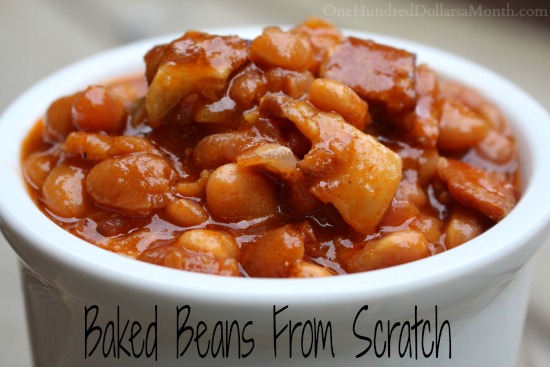
When I was younger, my parents and I would go to the New York state border to a restaurant that featured Amish style cooking.  Sadly, after a few years it closed, but Mavis Butterfield over at One Hundred Dollars A Month blog came across a Mennonite recipe for Baked Beans from scratch that looks like the kind I enjoyed so many years ago.  I will have to try making it myself.

Wednesday, July 1, 2015

The Park Grill at Home

NCJeeper made a great post on the forum at The Survival Podcast on how to build a park-style grill at home.  It definitely requires some good metalworking skills like welding so it is beyond my capabilities, but it looks like it would be fairly simple to make if you had the right tools and materials.